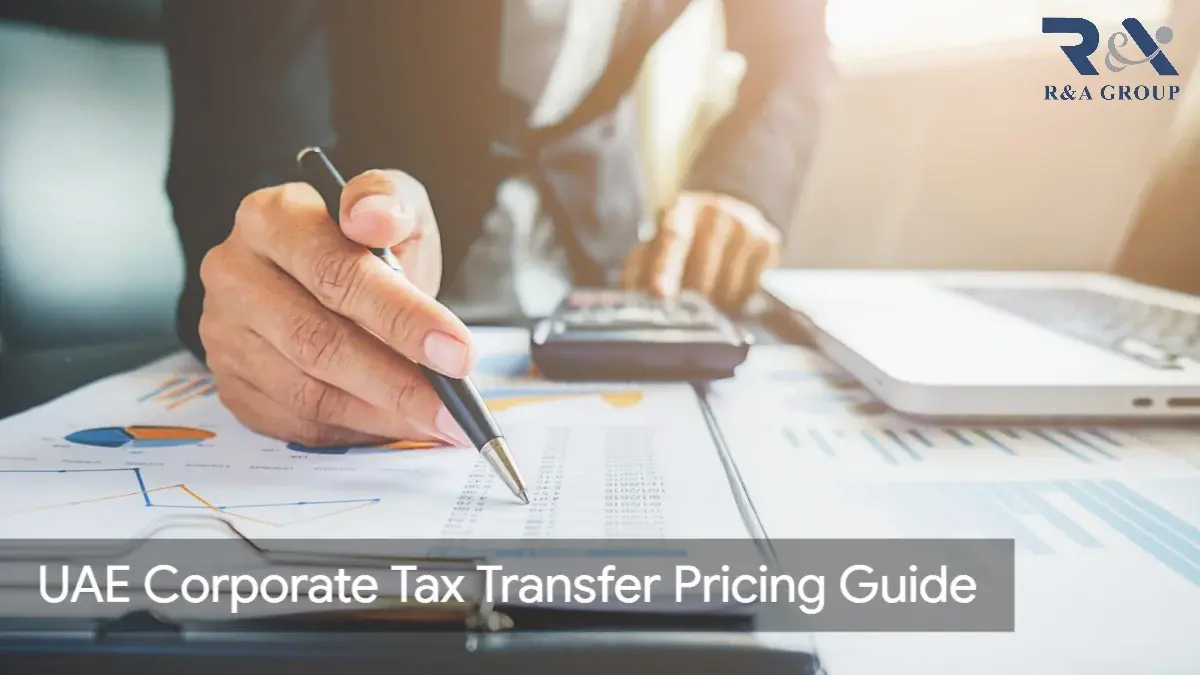
UAE Corporate Tax Transfer Pricing Guide
This guide explains transfer pricing under the UAE Corporate Tax framework and how businesses must apply the arm’s length principle when conducting transactions with related parties or connected persons. It also outlines key compliance requirements, documentation obligations, and how professional advisory services from R&A Group support businesses in meeting UAE Corporate Tax regulations.

Transfer pricing is a central element of the corporate tax framework in the UAE. Businesses engaging in transactions with Related Parties or Connected Persons must ensure that such dealings comply with the arm’s length principle under the UAE Corporate Tax Law.
This comprehensive guide explains transfer pricing in the UAE, outlines documentation requirements, clarifies compliance obligations, and highlights how professional corporate tax and transfer pricing advisory services from R&A Group support businesses in meeting their regulatory responsibilities with confidence.
What Is Transfer Pricing in the UAE?
Transfer pricing in the UAE applies to transactions between Related Parties or Connected Persons. These transactions must be priced according to the arm’s length principle, meaning the terms should reflect what independent parties would agree under similar circumstances.
Unlike unrelated businesses that determine pricing through market forces, related entities may influence pricing internally. To prevent profit shifting and ensure fair taxation, UAE Corporate Tax rules require that controlled transactions reflect market value.
Transfer pricing affects:
- Sale or purchase of goods
- Provision of services
- Financial arrangements such as loans and guarantees
- Transfers of intellectual property
- Dealings involving Permanent Establishments
Every taxable person must comply with the arm’s length principle, regardless of size. However, detailed documentation requirements apply only when specified thresholds are met.
Scope of Transfer Pricing Under UAE Corporate Tax Law
Transfer pricing rules apply broadly across business structures in the UAE, including the mainland and Free Zone entities.
Transactions Covered
Transfer pricing provisions apply to:
- Tangible goods – sale or transfer of physical products
- Services – management, technical, administrative, or other services
- Intangible assets – intellectual property and non-physical assets
- Financial transactions – loans, guarantees, and funding arrangements
- Permanent Establishment dealings
Although all taxable persons must apply the arm’s length principle, the obligation to prepare a Master File and Local File depends on whether revenue thresholds are exceeded.
Documentation Requirements in the UAE
The UAE Corporate Tax framework sets clear thresholds for formal transfer pricing documentation.
Master File and Local File
A taxable person must prepare and maintain a Master File and Local File if:
- UAE revenue in the relevant tax period reaches AED 200 million or more; or
- The entity is part of a multinational group with consolidated global revenue of at least AED 3.15 billion.
Smaller businesses must still ensure compliance with the arm’s length principle and retain sufficient records to support their pricing if requested by the Federal Tax Authority (FTA).
Country-by-Country Reporting (CbCR)
Eligible multinational enterprise groups meeting the applicable global threshold must maintain Country-by-Country Reporting documentation in accordance with the UAE regulations.
Transfer Pricing Disclosure Form
When submitting a corporate tax return, taxable persons must complete a Transfer Pricing Disclosure Form, which includes:
- Details of related party transactions
- Transfer pricing methods applied
- Confirmation of arm’s length compliance
Accuracy and completeness are critical, as the burden of proof lies with the taxpayer.
The Arm’s Length Principle in the UAE
The arm’s length principle requires that transactions between Related Parties and Connected Persons be priced as though they were conducted between independent entities under similar conditions.
This principle applies even if:
- There is no formal written agreement
- A transaction occurs without full market-based remuneration
- The arrangement is informal
The objective is to ensure that controlled transactions do not distort taxable profits within the UAE tax system.
How the Arm’s Length Principle Is Applied
Applying the arm’s length principle involves a structured analysis.
Step 1: Identify Related Parties and Controlled Transactions
Businesses must:
- Determine whether parties meet the definition of Related Parties or Connected Persons
- Identify all relevant transactions and arrangements
- Conduct a comparability analysis
A comparability analysis examines:
- Functions performed
- Assets used
- Risks assumed
- Market conditions and economic circumstances
- Contractual terms and business strategies
Step 2: Select the Most Appropriate Transfer Pricing Method
Recognised methods include:
- Comparable Uncontrolled Price (CUP) Method
- Resale Price Method
- Cost Plus Method
- Transactional Net Margin Method (TNMM)
- Profit Split Method
The most appropriate method must be selected based on the nature of the transaction and available data.
Step 3: Determine and Support the Arm’s Length Price
This stage involves:
- Gathering internal or external comparable data
- Making necessary adjustments for differences
- Establishing an arm’s length range
- Selecting an appropriate point within that range
- Maintaining full documentation
Proper documentation is essential in the event of review by the FTA.
Related Parties and Connected Persons Under UAE Corporate Tax
Understanding the definition of Related Parties is fundamental to compliance.
Who Qualifies as a Related Party?
Under the UAE Corporate Tax Law, Related Parties may include:
- Two or more natural persons with close personal or familial relationships
- A natural person and a juridical person with substantial ownership or control
- Two or more juridical persons with significant ownership links
- Partners in the same unincorporated partnership
- A person and their Permanent Establishment
- Founders, trustees, beneficiaries, and related parties of trusts or foundations
Control, ownership, or significant influence are central factors in determining related party status.
Why Transfer Pricing Compliance Matters
Failure to comply with transfer pricing requirements may lead to:
- Adjustments to taxable income
- Administrative penalties
- Increased scrutiny from tax authorities
- Reputational risk
Given the technical complexity and documentation requirements, businesses operating in the UAE benefit from structured compliance processes and specialist advisory support.
Corporate Tax and Transfer Pricing Advisory by R&A Group
Navigating UAE Corporate Tax and transfer pricing regulations requires technical expertise, regulatory awareness, and strategic financial insight.
R&A Group, based in the UAE, provides structured and compliance-driven Corporate Tax and Transfer Pricing advisory services designed to help businesses:
- Assess related party transactions
- Conduct comparability and functional analyses
- Select appropriate transfer pricing methods
- Prepare Master File and Local File documentation (where applicable)
- Complete Transfer Pricing Disclosure Forms accurately
- Align internal policies with UAE Corporate Tax requirements
- E-Invoicing
With regulatory compliance at the core of its approach, R&A Group supports businesses in maintaining accurate financial reporting and meeting their UAE Corporate Tax obligations with clarity and confidence.
Final Thoughts
Transfer pricing in the UAE is not optional for businesses engaging in related party transactions. The arm’s length principle applies across the board, and documentation requirements must be carefully assessed against statutory thresholds.
A structured approach to compliance — supported by qualified corporate tax and transfer pricing specialists — helps businesses manage risk, maintain transparency, and ensure alignment with the UAE Corporate Tax Law.
For businesses seeking clarity, compliance, and strategic tax alignment, professional Corporate Tax and Transfer Pricing advisory services from R&A Group provide a reliable and informed solution within the UAE regulatory framework.
Frequently Asked Questions – UAE Corporate Tax Transfer Pricing
1. What is transfer pricing under the UAE Corporate Tax?
Transfer pricing in the UAE refers to the requirement that transactions between Related Parties or Connected Persons must follow the arm’s length principle under the UAE Corporate Tax Law. This means the pricing of goods, services, loans, or intellectual property between related entities must reflect market value, as if the transaction were conducted between independent parties operating in the UAE.
This rule applies to both mainland and Free Zone businesses in the UAE that are subject to Corporate Tax.
2. Who must comply with the UAE transfer pricing regulations?
All taxable persons in the UAE that engage in transactions with Related Parties or Connected Persons must comply with the transfer pricing rules.
While every business must apply the arm’s length principle, detailed documentation such as a Master File and Local File is required only if:
- UAE revenue in the relevant tax period reaches AED 200 million or more, or
- The business is part of a multinational group with consolidated global revenue of at least AED 3.15 billion.
Even if these thresholds are not met, businesses must retain sufficient records to support their pricing upon request by the Federal Tax Authority.
3. What documents are required for transfer pricing compliance in the UAE?
Transfer pricing compliance in the UAE may include:
- Master File (if revenue thresholds are met)
- Local File (if revenue thresholds are met)
- Transfer Pricing Disclosure Form submitted with the Corporate Tax return
- Supporting comparability and functional analysis documentation
The burden of proof lies with the taxpayer, meaning businesses must demonstrate that related party transactions meet the arm’s length principle.
4. What is the arm’s length principle in the UAE?
The arm’s length principle requires that transactions between Related Parties in the UAE be priced as if they were agreed between independent businesses under similar conditions.
To apply this principle, businesses must:
- Identify controlled transactions
- Conduct a comparability analysis
- Select the most appropriate transfer pricing method
- Determine an arm’s length price or range
- Maintain supporting documentation
This ensures fair profit allocation and compliance with the UAE Corporate Tax regulations.
5. How can businesses ensure transfer pricing compliance in the UAE?
Businesses in the UAE can ensure transfer pricing compliance by:
- Reviewing all related party transactions
- Conducting a structured functional and economic analysis
- Applying appropriate transfer pricing methods
- Maintaining accurate accounting records
- Preparing required documentation on time
Professional Corporate Tax and Transfer Pricing advisory services from R&A Group support businesses across the UAE in aligning their pricing policies with regulatory requirements, reducing tax risk, and ensuring accurate Corporate Tax reporting.
Share this post: